
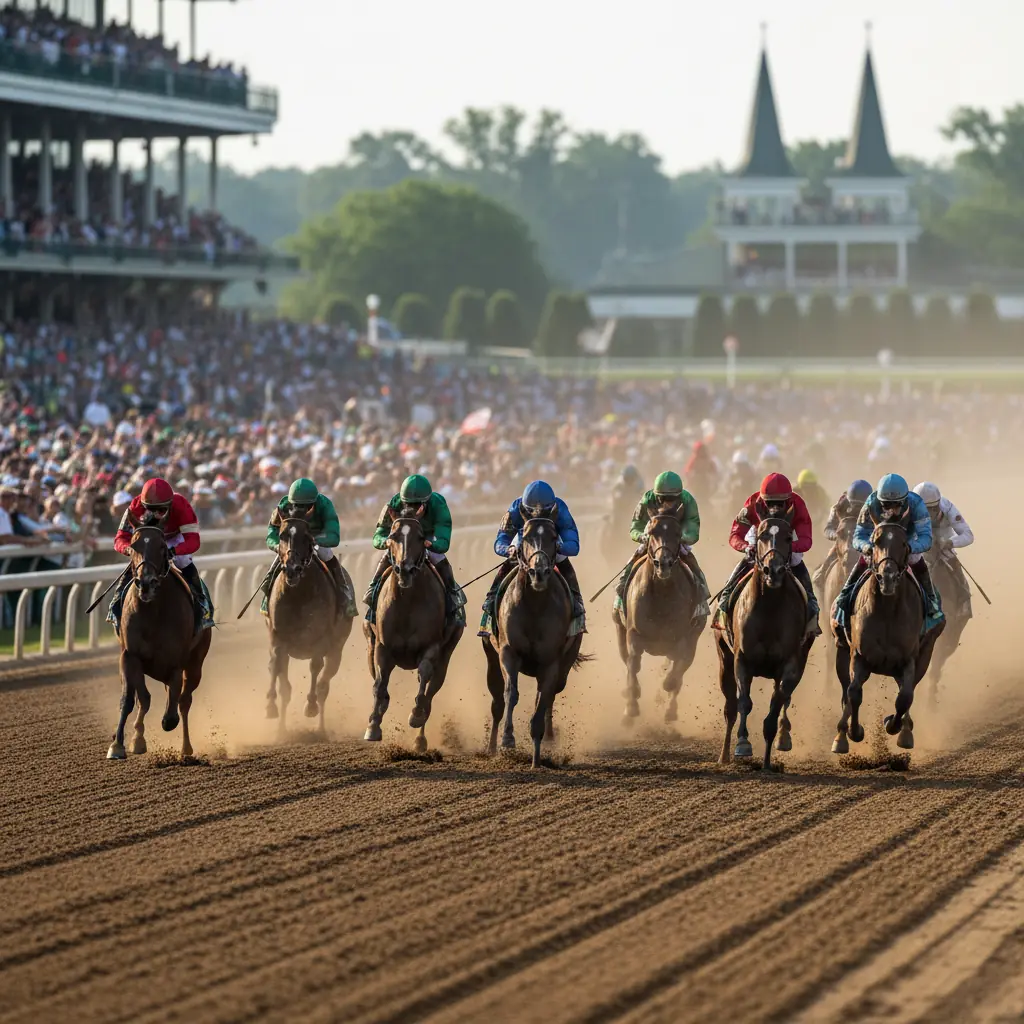
As a seasoned observer of the Kentucky Derby scene, I’ve learned that the real race begins long before the iconic Run for the Roses. It starts with the Stakes Race Prep Series, a thrilling, months-long journey where future Derby contenders prove their mettle. Understanding how to decipher prep race form is absolutely essential. Think of it as unlocking a secret code – it allows you to spot potential champions early on, giving you a significant advantage when everyone else is just catching up. This isn’t just about picking a winner; it’s about understanding the narrative that unfolds on the track, race by race, as these incredible athletes prepare for their ultimate test.
Understanding the Stakes Race Prep Series
The Stakes Race Prep Series serves as a crucial proving ground, meticulously designed to identify the most promising contenders vying for a coveted spot in the Kentucky Derby. To effectively analyze a horse’s form and predict its potential, it’s essential to understand the structure, significance, and nuances of these races. Knowing which horses excel in these prep races can dramatically increase your odds of picking a Derby winner.
The series operates on a point system, rewarding horses for their performance in designated graded stakes races. These races are not created equal; the points awarded typically escalate as the Kentucky Derby draws nearer. Early prep races, held in the fall and winter, offer a smaller number of points, while the late-season races in March and April carry significantly more weight. A strong showing in a late-stage prep race can catapult a horse into Derby contention, while consistent performance throughout the series demonstrates stamina and adaptability.
The timing and location of these races are strategically planned. Key prep races occur at different racetracks across the country, offering horses the opportunity to compete on various surfaces and against diverse competition.
The Structure of the Road to the Kentucky Derby
The Road to the Kentucky Derby is a series of designated races that award points to the top finishers. These points determine which horses qualify for entry into the Kentucky Derby. Earning Kentucky Derby points is the sole criteria for entry into the first leg of the Triple Crown. The structure of the Road to the Kentucky Derby varies slightly by year, with minor adjustments to the race schedule and point allocations. There are also variations depending on location, as some international races are included in the overall point system.
Key Prep Races to Watch
Several prep races consistently produce top Kentucky Derby contenders. The Fountain of Youth Stakes and Florida Derby, both held at Gulfstream Park, are known for attracting speedsters. The Santa Anita Derby in California often showcases horses with tactical speed and stamina. In the mid-south, the Arkansas Derby at Oaklawn Park provides a tough test for horses who can handle a demanding track. Moving eastward, the Blue Grass Stakes at Keeneland and the Wood Memorial at Aqueduct have a rich history of identifying Derby prospects.
Each of these races presents unique challenges. The distance, track conditions (fast, sloppy, turf), and the level of competition all play a significant role in determining the outcome. Some races favor frontrunners, while others reward closers. Analyzing past performances and understanding these factors is key to handicapping these crucial prep races.
Deciphering Key Elements of Prep Race Form
Analyzing horse racing form is about more than just picking a name. It’s about understanding the intricate details that hint at a horse’s true ability and future potential. By carefully examining specific data points, such as speed figures, running style, and how a horse handles different track conditions, one can start to formulate informed predictions about their performance in upcoming races.
Understanding Speed Figures and Their Limitations
Speed figures, like Beyer Speed Figures or Brisnet Speed Figures, offer a numerical representation of a horse’s performance in a race. They attempt to standardize performance across different tracks and conditions. However, it’s crucial to understand their limitations. For instance, a horse might achieve a high figure on a particularly fast track, but struggle on a slower surface. Improvement isn’t always reflected linearly. Consider the case of “Starlight Express,” who consistently ran average figures until suddenly improving by 15 points in a single race on a muddy track. This shows how a horse can defy expectations, and relying solely on figures can be misleading without considering other factors.
Analyzing Pace Scenarios and Their Impact
Pace analysis involves understanding how a race is likely to unfold based on the running styles of the horses involved. Horses with early speed might benefit from a slow early pace, while closers need a fast pace to set up their late run. For example, in a recent prep race, “Quickfire” appeared to be the horse to beat based on speed figures, but “Steady Eddie,” a closer, won by a length. A very fast early pace wore out “Quickfire” allowing “Steady Eddie” to capitalize in the stretch. Identifying potential pace advantages can be a key to handicapping success.
The Role of Track Conditions and Distance
Track conditions and distance play significant roles in a horse’s performance. Some horses prefer running on dirt, while others excel on turf. Similarly, a horse might be a sprinter, thriving at shorter distances, or a stayer capable of running longer routes. Past performance data can reveal these preferences. By carefully studying a horse’s record, it’s possible to identify those that excel under specific conditions or at preferred distances. Look for patterns; does a certain horse always perform well on a wet track, or at a mile and an eighth? These tendencies can greatly influence the outcome of a race.
Identifying Horses Primed for Improvement
Recognizing horses that are likely to improve between prep races is a crucial skill for serious horse racing enthusiasts. It’s not just about picking the fastest horse in the last race; it’s about identifying the horse poised to take a significant leap forward. Factors such as pedigree, training patterns, and even subtle performance indicators can reveal hidden potential that the average observer might miss. The ability to decipher these clues can be the difference between a casual bet and a winning ticket.
Delving into a horse’s background, observing its progress, and understanding the nuances of its training regimen can provide a competitive edge. The ultimate goal is to find that diamond in the rough – the horse whose true talent is just beginning to surface as the Kentucky Derby approaches. It demands a keen eye, dedicated research, and a little bit of intuition.
Leveraging Pedigree Clues
Pedigree analysis is an art and a science. It involves researching and interpreting a horse’s lineage to understand its potential strengths and weaknesses. Understanding stallion influence and broodmare sire is crucial. Some stallions consistently produce offspring with the stamina and speed required for the Kentucky Derby’s demanding distance. Similarly, the broodmare sire can contribute valuable traits. However, pedigree is not destiny. While a strong pedigree can certainly increase the odds, it’s crucial to remember that it’s just one piece of the puzzle. A well-bred horse still needs the right training and racing conditions to reach its full potential.
Spotting Trainer Patterns and Angles
Certain trainers have a history of consistently improving their horses throughout the prep series, fine-tuning their conditioning and race selection to peak at the right time. Look for trainers with a proven track record in the Kentucky Derby and a knack for bringing horses to their best form in the spring. The angle to look for is when they give their horses just enough work to build stamina without over taxing them early. Study trainer statistics, paying close attention to their success rates with horses making their second or third start after a layoff, or those stretching out in distance. These patterns are very helpful.

Connecting Prep Race Performance to Derby Potential
Success in prep races is undoubtedly a key indicator when evaluating Kentucky Derby potential. However, it’s not a simple equation. Translating that early speed and stamina into Derby glory demands a nuanced assessment. Expecting a horse to automatically replicate a prep race win on the first Saturday in May is a common mistake. Factors like race conditions, the caliber of competition, and the horse’s developmental stage all play crucial roles.
Consider horses who dominated the prep scene, only to fade in the grueling mile-and-a-quarter of the Derby. Conversely, some colts might show flashes of potential in those earlier races but truly blossom and peak right when it matters most. The key is to understand that the Derby demands not just speed, but also stamina, tactical flexibility, and the ability to handle the pressure of a large field. Perfecting race strategy and navigating the pace scenario effectively are paramount to convert that prep race performance into real Kentucky Derby potential.
Assessing the Competition Level
Don’t just look at who won; analyze who they beat. A dominant win against a weak field might be less impressive than a hard-fought second place against a group of proven contenders. Dive into the past performances of the horses in the race. Are they consistent performers? Are they stepping up in class? Understanding the strength of the field and where each horse is in their form cycle can paint a clearer picture of the true significance of the result. For example, a horse might seem impressive winning a Grade 3 race, but if the other entrants were primarily allowance-level horses, the victory may not signal true Derby readiness.
Adjusting Expectations for the Derby Distance
The Kentucky Derby’s distance is a true test of stamina. A horse that excels at shorter distances might struggle to maintain its speed and form over a mile and a quarter. Look for clues in a horse’s pedigree and running style. Are they bred to handle the distance? Do they possess a strong late pace? A horse that burns too much energy early in the race might fade in the stretch. A slower, more measured approach, conserving energy for a final surge, can be more effective. Therefore, consider how they behave running in a longer distance during the race. It is important to adjust expectations for the Derby distance.
Advanced Strategies for Prep Race Analysis
To truly gain an edge in horse race handicapping, one must move beyond simple past performances and delve into advanced analytical techniques. These strategies, including fractional timing analysis, trip handicapping, and even predictive modeling, can reveal hidden potential and provide a deeper understanding of a horse’s capabilities. By mastering these methods, handicappers can uncover subtle advantages that others miss, leading to more informed and potentially profitable wagering decisions.
Decoding Fractional Timing
Fractional timing analysis involves breaking down a race into its component parts, examining the time it takes for a horse to complete each fraction (e.g., quarter mile splits). This goes beyond the final time, offering insights into a horse’s early speed, closing speed, and pace sustainability. A horse might have a slow final time, but strong early fractions, indicating it was forced to set a fast pace and tired late. Another horse with modest early fractions but a blistering final quarter mile shows a powerful closing kick. Comparing these fractional times to those of other races, and adjusting for track conditions, paints a much clearer picture of a horse’s true ability and preferred running style. For example, a horse consistently running the first quarter mile in under 22 seconds might be ideally suited for shorter sprints, while one consistently improving its fractions throughout a longer race could excel at longer distances.
Trip Handicapping
Trip handicapping is the art of evaluating how a horse ran a race, considering external factors beyond its raw performance. It’s about understanding the ‘trip’ a horse had. Did the horse get stuck behind a wall of horses, encountering significant traffic? Did it run wide around the turns, losing valuable ground? Did it suffer a bad break from the starting gate, putting it at an immediate disadvantage? These factors can significantly impact a horse’s finishing position. A horse that finishes fifth after a troubled trip might actually be a far better contender than a horse that finished third with a smooth, unchallenged run. Imagine a scenario: A horse, known for its late charge, gets boxed in on the rail for most of the race, only finding clear running room in the final strides. Despite finishing fourth, the horse displayed a powerful closing burst indicating untapped potential and making it a strong contender in its next race with a more favorable trip. Alternatively, another horse breaks slowly, is forced to circle the field several paths wide to gain position, and ultimately fades in the stretch. The final result doesn’t reflect the energy expended and the unfavorable circumstances faced, making trip handicapping essential for accurate evaluation.
Conclusion
Unlocking the secrets within a stakes race prep series requires commitment and a passion for the sport. Mastering form analysis takes dedication, demanding that one explore past performances, speed figures, and pedigree insights. But the reward is clear: a significantly improved ability to identify potential Kentucky Derby contenders long before they reach the starting gate.
The journey of horse racing handicapping is one of continuous learning. There is always more to discover, new angles to explore, and evolving data to incorporate. By continuing to refine your approach, experimenting with different variables, and remaining open to new perspectives, you’ll sharpen your skills in spotting those hidden gems on the Derby trail. So, dive deeper. Continue exploring and refining your handicapping strategy to discover new and innovative ways to analyze form and find your Kentucky Derby winner.